My high school, Amityville, was built on a tradition of blue-collar, old school discipline. I can still hear our coach, Joe Valla: “Hey, if it’s a snow day tomorrow, practice is at 10. Don’t be late.” The electricity would be off and the room would be freezing cold. We didn’t stop the conditioning at the end of practice until the walls were sweating.
As a team, we were never out conditioned. Red Bull comes from the same kind of ground. It started in Thailand as a drink for truck drivers and laborers who worked long, hard days. Old school still means HiLevel Fitness, and Red Bull athletes have it.
The title, Red Bull: Now What?, speaks to the moment every athlete reaches. The work has paid off. You’ve made it. Now what? This story is about how you answer that question, while you’re still competing and after.
There’s an earlier “now what” too. A young athlete signs, and the Red Bull sticker goes on the board for the first time. The habits built in that first season carry through the whole career and after it. That’s the best time to start the work.
The Wheel
It was a school day. I had a break, so I jumped in my car and drove to Kailua to make a delivery. Robby Naish and I had built a prototype of the wheel, sometimes called the gut wheel. Robby had been a student in my class at Punahou. Now he was competing all over Europe, and the hotels he stayed in had no workout rooms. The wheel was a must to keep up his fitness on the road.
The wheel stands for old school: hard work and discipline. Proper form is mandatory. Robby is old school. His longevity comes from the hard work behind the speed.
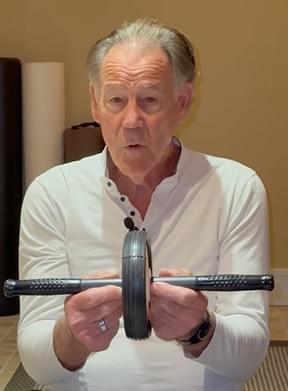
Robby packed the wheel for Europe because the work had to go with him. New hotel, new country. You get down on the floor and do it again.
When I pulled into Robby’s driveway, he was out in the yard putting his sponsors’ stickers on his sails. Up at the peak of the sail was the Red Bull logo. It was prominent, and it became synonymous with speed.
It was fun watching him dominate windsurfing at Backyards on the North Shore and at Browns at Diamond Head. He was the fastest down the line, and he jumped the highest. Just when you thought you knew what he would do next, he went deep and pulled out the drama.
Speed gets you noticed. It doesn’t keep you there. Hard work does.
Old School
Isiah Kiner-Falefa is old school too. He played baseball at Mid-Pacific for Coach Dunn Muramaru. I watched him at the State Tournament go deep in the hole, plant, and throw the runner out. He could hit for power and run the bases. Isiah worked hard, and he made it fun.
The Texas Rangers drafted him in the fourth round in 2013, straight out of high school. He came up as a catcher and an infielder. In 2020 he won a Gold Glove at third base. He had made it. Then came the question every athlete runs into: now what?
He kept going. He has been traded, moved all over the field, and asked to prove himself again on new teams. New team, new position. He got down on the floor and did it again.
This year he played for Boston, fought his way back from a forearm injury, and is a free agent again. Now what, one more time.
That is the answer to “now what.” You keep getting better.
The Work
Red Bull athletes already have the body work done. Strength, speed, recovery, nutrition. That’s handled. What they need is the head and the heart to hold up when it matters. That is my work.
I’m a coach’s coach and the author of Accept Love: A Coaches Manual. I coached thirty years at Punahou and have spent thirty years in private practice. I’m deep into breath work. What I bring is empathy for others, support, and the ability to relate to athletes of all ages and at all levels as they answer the same question: now what?
First, know yourself. Your Profile shows you how you’re built: how you take in information, make decisions, and handle pressure.
Then live GED. Gratitude is awareness and acceptance. Excitement is controlled passion and aggressive focus. Devotion is discipline and trusting the process. An athlete with all three doesn’t need to be pushed. They show up.
Breathe. Your breath sets your tempo. Breath work is how you move between states. When you need to come up, for a big set, a heat, or a final, faster breathing brings your energy up. When you need to come down, at the start gate or after a mistake, slow breathing with a long exhale settles you. You learn which one the moment calls for and use it.
Fear doesn’t go away, so face it with a plan. Robby still races. Today it’s his Corvette on the track. His gap isn’t skill. It’s commitment. He calls it the self-preservation gene, the governor that kicks in on a big day. That’s what we work on.
Win or lose, accept the result. Debrief it. Reframe it if you need to. Let go of any and all negative emotion. Then move forward whole, with the lesson learned.
Create the opportunity, on your terms, to get better. Find out how hard you want to work and how good you want to become.
Build trust. Keep your word to your coaches, your crew, and your sponsors, one promise at a time.
Learn to give your best effort under extreme pressure. Find the rhythm, the flow, and the focus the moment demands.
MR
Mark Richards won four straight world surfing titles, from 1979 to 1982.
I pulled up at the Embassy, Bernie Baker’s house. The surf was blown out. MR was stretching. I just wanted to get wet.
I asked him why he was going out in that. He said surfing in bad conditions helps him find the rhythm in a contest. He breathed and settled down. I followed his lead and learned to settle down at my level.
I’ve used that with surfers at every level of competition since. Contests don’t wait for perfect waves. You learn to find your rhythm when it’s blown out.
Maile
Maile was an outstanding back row player. She had fire, the fast-burning fuel that let her run down any ball and jump past the limits of her body. She also had the drive to push through long matches, the weight room, and hill runs.
Her weakness was taking direction. In critical moments she could not accept coaching. She heard simple feedback as harsh criticism.
Her coach referred her to me after she shanked a ball that cost her team a tight match. The work started with breathing. She learned to breathe as she debriefed the pain of her mistakes, so she could accept them and forgive herself. From there she built the mental toughness, the head and heart, to give her best effort under heavy pressure.
Next came battle breathing: short, rapid breaths through the nose before a big point. It brought her energy up and cleared her head so she could see what she wanted to have happen. Then one long exhale settled her, and she could enjoy the process.
As a result, she could accept feedback from her coaches and teammates. In tight matches she controlled her emotions, made incredible plays, and became the leader of her team.
Now What?
Every career ends. Robby’s competitive windsurfing days ended. Isiah’s baseball career will end someday too. So will every athlete’s at Red Bull. The question doesn’t go away when the playing stops. It gets bigger.
Red Bull athletes carry the logo long after their last race. An athlete who answers “now what” well stays part of the Red Bull story. One who doesn’t can become a hard story to tell.
Robby answered it by staying a competitor. He still builds and tests his own gear, and he still races. Isiah is answering it the way he has since Mid-Pacific: hard work, made fun, every day.
Those habits don’t retire. You can take them into coaching, mentoring young athletes the way Coach Dunn mentored Isiah. You can take them into business, school, your community, a new sport, or your family. There’s no wrong choice, as long as it’s yours and it fits who you are.
A Great Day
Steve Kerr tells a story about Roger Federer. In 2017 the Warriors were in China, and Federer was in Shanghai for a tournament. Kerr brought him in to talk to the team. Draymond Green asked how he kept winning majors twenty years after his first.
The players expected him to say he outworked everybody. He didn’t. He told them about his day. He makes breakfast for his kids and takes them to school. He practices about two hours, with a routine that gets the work in without breaking his body down. Lunch with his wife. Dinner with the kids. When his head hits the pillow, he thinks, that was a great day. He’s done that for twenty years.
That’s old school. The work gets done every day, and it fits a life he loves. That’s the answer to “now what,” while you’re still playing and after. Stack great days.
Know yourself, keep getting better, and you win the game of life the way you won your best games: satisfied, at peace, and knowing you gave it everything.
Working Together
My offer is to work with Red Bull athletes at every level, from the start of their careers to the end. Each athlete gets a Profile and a personal HiLevel Performance Profile pamphlet. The pamphlet gives them an ongoing system of coaching. They work the process until they own it, while they’re competing and after.
A good place to start is a small group of athletes going through the four-part HiLevel engagement.
Brad Yates
For referrals or to work together:
HiLevel Coaching Service
hilevelhawaii@gmail.com · 808.295.2136
www.BradYates.com