Inspiration
HiLevel Coaching Service
The Isiah Kiner-Falefa Story
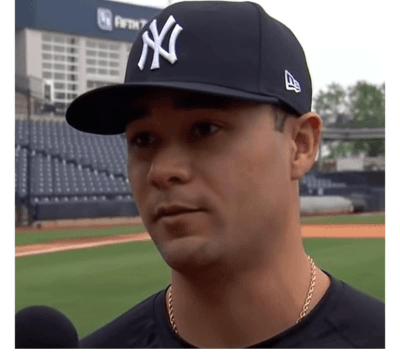
From Mid-Pacific to the Majors
His dream was to play for the Yankees in a World Series. He did.
Then he played in another one with Toronto. He came up 90 feet short.
Now he is with the Boston Red Sox, still chasing it.
That is the grind.
“He was one of the smallest guys on the team. He didn’t stand out. He just did his job and always thought of the team. He had a goal and just kept grinding.”
— Coach Dunn Muramaru, Mid-Pacific Institute
HARD WORK
Isiah Kiner-Falefa (IKF) was not a five-star recruit. He was not the biggest, fastest, or most talented kid at Mid-Pacific Institute. He did not receive a Division I scholarship out of high school. By every conventional measure, he was not supposed to make it.
But Coach Dunn saw something. Not talent — tendencies. The kid showed up every day. He competed in practice. He played for the team. And he kept grinding when others stopped.
That is hard work. Not the version you put on a poster. The real version. The version where nobody is watching, nobody is clapping, and nobody is telling you it is going to pay off. You do it anyway because you trust the process.
IKF was committed to San Jose State coming out of high school. He never got there. The Texas Rangers took him in the 4th round of the 2013 MLB Draft and he signed right away. Straight from Mid-Pacific to professional baseball. No college. No waiting. He bet on himself and went.
He worked his way through the minor leagues. He earned a Gold Glove at third base. He played shortstop for the New York Yankees in the 2022 postseason. Then, in 2025, he played in the Toronto Blue Jays’ World Series run — all the way to Game 7 against the Dodgers. He has played eight positions at the major league level.
That path — from undersized Mid-Pacific kid to Gold Glove winner to Game 7 of the World Series — is not about talent. It is about smart-hard work. Showing up with a plan, executing with discipline, and refusing to let the world’s assessment become your ceiling.
The HiLevel Principle: A bad performance is data, not identity. You study it, you adjust, and you get back to work. That is the grind. That is how it is done.
AGGRESSIVE FOCUS
On September 22, 2022, Isiah Kiner-Falefa stole home against the Boston Red Sox in the Subway Series. Full send. No hesitation. Total commitment with zero margin for error.
That is aggressive focus. It is not reckless. It is the opposite. It is seeing the moment, reading the pitcher, trusting your preparation, and going. The decision was made before his foot left the bag. Everything after that was execution.
Here is the thing about aggressive focus: it is the safe play. Hesitation is where injuries happen. Hesitation is where errors happen. When you commit fully — to a swing, a throw, a steal, a pitch — your body does what it has been trained to do. The training takes over. That is the zone.
For baseball players at every level, aggressive focus shows up in specific moments. The 3-2 count when you have decided you are swinging. The ground ball in the ninth when the game is on the line and you charge it. The stolen base attempt where your first step is everything.
The HiLevel Principle: Aggressive focus is not about trying harder. It is about committing fully to what you have already decided to do. The work was done in practice. Now let it play.
THE TRAINING START
IKF plays a different position every day. Third base Monday. Shortstop Tuesday. Second base Wednesday. Designated hitter Thursday. That is not chaos — that is versatility operating at the highest level.
But versatility requires a training start. Every single day, before the game, before batting practice, before infield, there is a moment where the preparation begins. That moment matters more than the game itself.
The training start for a baseball player is specific. See the ball deep. Stay back on off-speed. First step quick. These are not thoughts you hold during the game — they are intentions you set before it. The training start is where you tell your body what to focus on today.
IKF models himself after utility players like Kike Hernandez, Chris Taylor, and Brock Holt. His goal is to be one of the top utility players in the league. That means his training start changes every day, but the process of having one never does.
The HiLevel Principle: The training start is not a warm-up. It is a commitment. You do not start the day hoping to be good. You start the day deciding what good looks like, and then you go be it.
BREATHING
Baseball is the breathing sport. Between every pitch, between every inning, after every at-bat, there is time. That time is either your friend or your enemy. Breathing determines which.
The Five Forms of Breathing:
1. Recovery Breathing. After a bad at-bat, after an error, after a long inning. Slow exhale, longer than the inhale. You are telling your nervous system: we are okay. Reset.
2. Activation Breathing. In the on-deck circle. Before the first pitch. When you need your body to wake up and be ready. Short, sharp inhale. Quick exhale. You are telling your body: it is time.
3. Focus Breathing. Between pitches. Slow, controlled. One breath per pitch. You are narrowing your attention to the single thing that matters right now.
4. Pressure Breathing. Bases loaded in the ninth. Full count. The moment everyone is watching. Extended exhale with a hold at the bottom. You are creating calm in the middle of chaos.
5. Celebration Breathing. After the big hit, after the win. A deep, full breath that lets the joy in without losing control. You are allowing yourself to feel it without letting it take you out of the game.
The HiLevel Principle: You do not control the game. You control your breath. The breath controls everything else.
IT IS ALL ONE THING
Isiah Kiner-Falefa has played eight positions at the major league level. Shortstop, third base, second base, first base, catcher, left field, right field, designated hitter. Eight positions. One player.
Robby Naish, one of the greatest watermen in history, has competed at the elite level in five disciplines: stand-up paddling, prone paddling, outrigger canoe, foiling, and surfing. Five disciplines. One athlete.
Two Hawaii athletes. Same principle. It is all one thing.
IKF does not see eight positions. He sees one game. The footwork changes, the angles change, the timing changes. But the process — preparation, focus, execution, recovery — that stays the same. When you understand that the process is the constant, you can play anywhere.
For high school and college players, this is the message: The weight room is the same as the batting cage. The batting cage is the same as the classroom. The classroom is the same as the field. The process of getting better — showing up, being present, doing the work, reflecting, adjusting — it is all one thing.
The HiLevel Principle: If you think you are only a shortstop, you will break when they move you to third. If you know you are a baseball player, you can play anywhere.
THE LONG SEASON — ACCEPT LOVE
Game 7 of the 2025 World Series. Bottom of the ninth, tie game, bases loaded, one out. Isiah Kiner-Falefa was picked off third base trying to score. The throw just got him. The Dodgers won in 11 innings. He was 90 feet from a championship.
The social media attacks came. The second-guessing. The blame. He did not get a chance to talk about it after the game — organizational policy. He carried that with him through the entire offseason.
His response:
“We win as a team, we lose as a team.”
— Isiah Kiner-Falefa
That is Accept Love. It is not about the result. It is about how you carry yourself after the result. It is about coming back the next day, the next season, the next opportunity, without guilt and without resentment. Just re-engage.
IKF signed with the Boston Red Sox for 2026. He showed up to spring training hungry. Not trying to prove the doubters wrong — that is their game, not his. Just trying to get better. How can I improve. What is next. That is devotion.
The HiLevel Principle: You cannot control what people say about you after Game 7. You can control how you show up for Game 1 the next year. That is the only thing that matters.
STRENGTHS BECOME LIABILITIES
The same baserunning aggressiveness that let IKF steal home in the Subway Series — that full-send, no-hesitation instinct — is the same tendency that got him picked off in Game 7 of the World Series. Ninety feet short. The gift became the trap.
This is the hardest lesson in performance: your greatest strength is your greatest liability. Under pressure, you do not rise to the occasion. You fall to your tendencies. And your tendencies are your strengths, amplified.
The aggressive player gets too aggressive. The careful player gets too cautious. The leader over-leads. The team-first player disappears. It happens to everyone, at every level, in every sport.
The HiLevel Performance Profile identifies these tendencies before they become problems. By understanding your personality type — Free-Spirit, Controller, Player, or Supporter — you learn where your strength line is. You learn when your gift becomes your trap.
The HiLevel Principle: Knowing your tendencies is not a weakness. It is the ultimate competitive advantage. You cannot manage what you do not understand.
THE ROLE OF THE COACH
Isiah Kiner-Falefa’s grandfather introduced him to baseball when he was five years old. That was the first coach. The one who said: here, try this. The one who made it safe to play.
Coach Dunn Muramaru developed him at Mid-Pacific Institute. Thirty-seven years, five state titles, over 600 wins, more than 100 college players, 18 professionals. Coach Dunn did not just teach baseball. He taught the process. Team first. Fundamentals. Be Deliberate. Finish. Battle.
IKF has spoken about how Mid-Pacific prepared him — not just for baseball, but for life. The school, the coaches, the culture. That is the coaching pipeline. Grandfather to Coach Dunn to the professional game. Each coach built on what the last one started.
Bobby Dodd coached football at Georgia Tech and built a program on care and respect. He believed that if you treated players like men, they would play like champions. Coach Dunn operates the same way. Different sport, different decade, same truth.
IKF traveled to Samoa to teach kids baseball. He went back to where his family began and put a bat in a child’s hands. The cycle continues. The coached become the coaches.
The HiLevel Principle: The role of the coach is not to make players great. It is to create the environment where greatness can happen. Then trust the process.
Be Grateful.
Be Excited.
Be Devoted.
Show up ready. Accept Love. And let it flow.
It is all one thing.
Brad Yates
HiLevel Coaching Service
Hawaii Kai, Hawaii